
According to Forbes (2024), Consistent brand presentation across all platforms can increase revenue by up to 23%. The brand of your business represents much more than just a logo; it's the account of your business that customers buy into.
In fact, 88% of consumers say they buy from brands they trust, and 81% require trust in a brand before making a purchase. However, if that account starts to become obsolete or disconnected from reality, it's essential to recognize when a rebrand is needed to make it relatable, competitive, and trustworthy. Research shows that 65% of U.S. consumers are likely to disengage the moment they no longer resonate with the brand.
Subtle indicators are suggesting that your current brand identity may be hindering you from reaching your potential, such as dropping engagement with followers or inconsistent messaging.
In this blog, we will outline some of the most common indicators that it is time for you to update your image, as well as demonstrate how rebranding strategically can spark growth in sales, gain new audiences, and build loyalty with existing customers.
What exactly does rebranding look like? What is rebranding & why is it predominant in 2026?
Rebranding is far beyond swapping out a logo or updating a tagline. We’ve stepped into the age of Generative Identity, where brands are designed to be flexible, adaptive, and human‑focused. As mentioned earlier in the blog, we have talked about how crucial it is for a brand to build a sense of trust among consumers, as it can increase purchases by up to 81%.
In the last couple of years, producing visual assets has become faster and cheaper, while the demand for strategies that connect authentically with people has soared.
By 2026, rebranding means building systems that respond to context:
Responsive Logos - that subtly change depending on the device or environment.
Dynamic Color Schemes - that automatically adjust for accessibility and inclusivity.
Audio Signatures - that give your brand presence in voice‑driven and screenless platforms.
Brands that ignore these shifts risk looking outdated studies show that this can lead to a reduction in customer loyalty by 30%. A modern rebrand is about preparing your identity for the next decades!
1. Visual Identity Past Its Prime
Brand visual identity isn’t just about logo - it’s a collective impression made by colors, typography, & designing style. The moment when these factors no longer symbolize core values of a company, industry standards, or become unrelatable to the target audience, then the identity is considered past its prime.
An outdated look can suggest obsolescence, even if your offerings are innovative and cutting-edge. Modern consumers expect brands to evolve visually in step with cultural and technological shifts.
For example, some prominent companies, such as Lack, Mailchimp, & Dropbox, have all changed their visual identity over time to stay relevant.
Let’s go into detail about Slack -
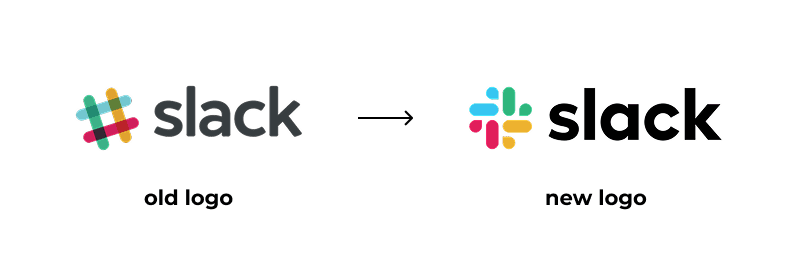
Slack simplified its identity by introducing a new logo a four-color “octothorpe” symbol with cleaner geometry and a consistent palette. The typography was also refined to feel more professional. The goal was to make the brand more versatile, scalable, and recognizable across digital and print media. According to a sales report by Slack, this redesign helped them to increase brand recognition by 18% in digital surveys, proving that a modernized identity can deliver measurable impact.
According to Adweek's report (2019), Mailchimp's rebrand helped increase brand recall by 24% among small business owners.
Fast Company (2018) Dropbox’s rebrand coincided with a 10% increase in user engagement across creative industries!
Reinvention for market expansion
Reinvention for Market Expansion is the deliberate changes a company makes to its brand identity to grow beyond its existing market and appeal to new audiences.
It illustrates that the brand is evolving with consumer expectations. It facilitates a brand to remove limitations that might tie the brand too narrowly to one product or market. It creates a more flexible, modern identity that can travel across cultures and different domains.
For example:
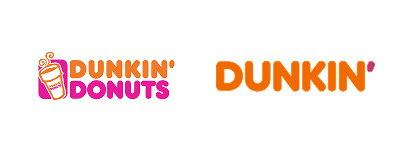
Dunkin’ Donuts → Dunkin’ (2019) Dropping “Donuts” emphasized beverages and broader offerings. This repositioning contributed to a 2.7% increase in same-store sales the following year.
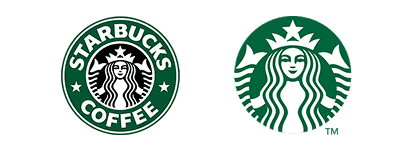
Starbucks dropped “Coffee” from its logo to reflect its expansion into food and lifestyle products. This helped them to generate over 40% of revenue from non-coffee products.
Mastercard: simplified its logo to strengthen global recognition. This redesign has been a success for them as it has led to maintaining brand value exceeding $10 billion.
3. Negative or misleading perception
Brand identity is not just about recognition - it’s about building trust among your targeted audience, & credibility! When a company’s logo, name, or design choices Sending the wrong signals, they risk creating confusion or even damaging credibility.
A poorly aligned identity can mislead audiences about what the brand offers, or worse, make it appear outdated, unreliable, or irrelevant.
For example:
Gap: Introduced a new logo that was pulled within a week after backlash. The failed redesign cost millions in lost consumer trust.
Yahoo: Frequent logo changes created confusion among users, weakening brand recognition.
Tropicana: Packing redesign leads to a 20% drop in sales within two months, then the company reverts to its previous design!
Jaguar has faced backlashes in the past because their reinvention was not aligned with audience expectations.
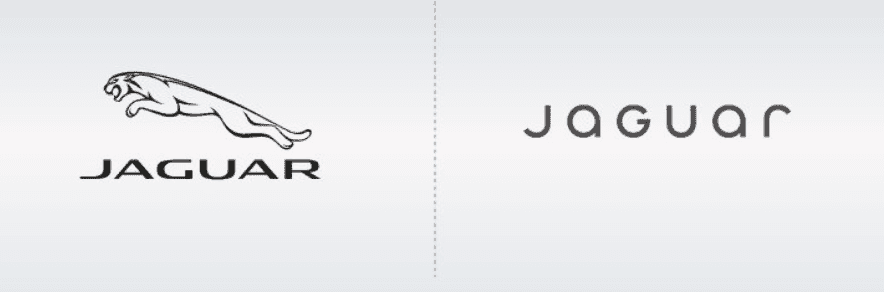
The Jaguar moved away from its iconic “growler” emblem and heritage‑driven luxury cues, opting instead for abstract visuals and slogans like “Break Moulds. Copy Nothing.” While bold, this shift confused customers who associated Jaguar with sleek performance and timeless prestige.
The disconnect between the new identity and the brand’s core values sparked backlash, leaving audiences uncertain about what Jaguar stood for!
4. Too similar to its competitors
When a company’s identity looks or feels too close to its competitor, it risks being overshadowed and losing its unique voice. 77% of consumers make purchases based on brand name recognition. Instead of standing out, the brand blends in, creating confusion for customers and weakening its market position. According to McKinsey (2024), Brands that can differentiate effectively are 3x more likely to achieve higher market share.
It’s not always about identical logos sometimes, different logos can still feel the same if they share the same visual cues. When brands rely on similar colour palettes, icon shapes, or typography styles, they risk blending into the crowd. Even if the logo design itself is unique, the overall look may remind customers of a competitor, weakening differentiation. Whereas consistent Brands are likely to boost revenue by 20%.
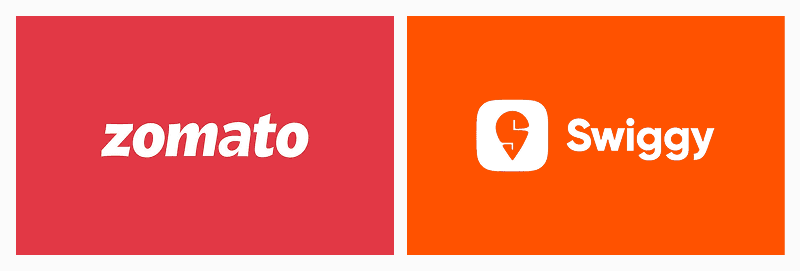
One of the best examples will be food delivery apps, such as Zomato & Swiggy.
Over time, Swiggy differentiated with its bold ‘S’ symbol and Zomato leaned into witty copywriting and a stronger wordmark proving that true reinvention requires more than just a logo change; it demands a unique visual language.
5. Declination in engagement
A brand’s identity shouldn’t be static or rigid- it must evolve with time to keep the audience hinged with them!
Customers may stop interacting with campaigns, ignore updates, or even switch to competitors who feel fresher and more relevant. Declining engagement is often a warning sign that the brand’s identity no longer reflects its values or the cultural moment, and it’s time for a rebranding.
Any start-ups or small business thrives upon loyalty and word-of-mouth. Even studies reveal that emotionally connected customers are worth 50% more than highly satisfied customers. When engagement declines, it’s not just about a few likes or clicks. It's a sign that you are losing your relevance among your customers!
For example:
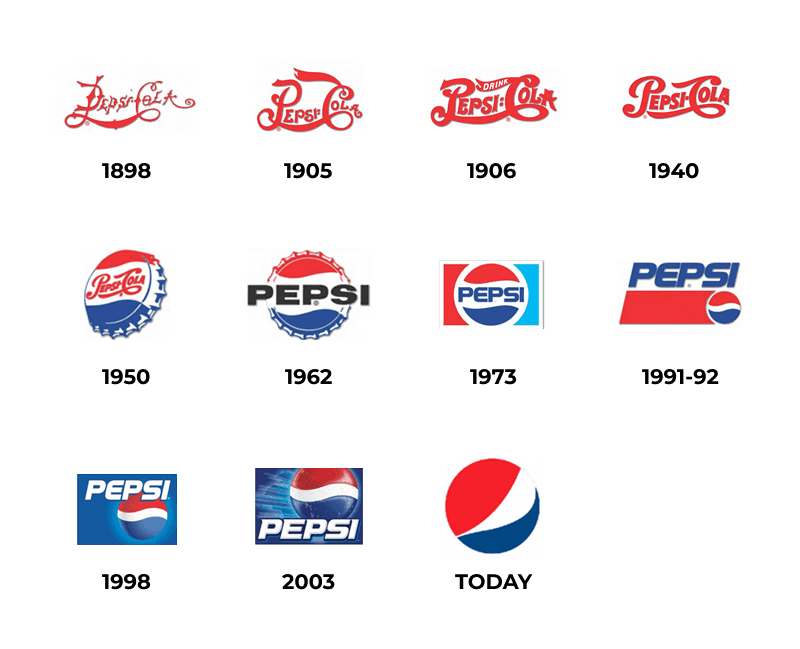
Pepsi has reinvented its Visual identity multiple times over the decades, proving that evolution is essential for relevance. According to AdAge (2023), Pepsi’s 2023 redesign was part of a global strategy, which helped them to reconnect with younger audiences, and early reports showed a 12% lift in brand favorability among Gen Z consumers.
AI in branding: A tool, not a supplanting in human creativity
AI has emerged in all industries, and honestly, it has become a vital part of industries and human lives. It is helping industries to transform & branding is no more exception. While 62% of designers already use AI tools to accelerate creative workflows, the sense of branding still relies on human creativity to form trust & emotional resonance among users. In fact, 81% of consumers say they need to trust a brand before making a purchase, showing that nothing can replace emotional depth and authenticity, which a human can bring into branding.
AI is supposed to be embraced as a tool rather than completely relied on; AI can facilitate proofread campaigns, benchmark competitors, and generate quick visual prototypes. This can help creatives focus on what truly matters: crafting narratives that resonate with audiences, ensuring cultural relevance, and building identities that feel authentic rather than automated.
As Forbes Agency Council notes, “The most successful branding narratives will emerge from the fusion of AI’s efficiency with human ingenuity- not from choosing one over the other.” This synergy is exactly what we practice at Golden Flitch. We experiment with generative imagery where it fits a client’s vision, but we never let technology overshadow the human touch that defines brand storytelling.
Here is a transformation we’ve delivered at Golden Flitch - we recently helped a law firm modernize its identity with responsive logos and a refined visual system
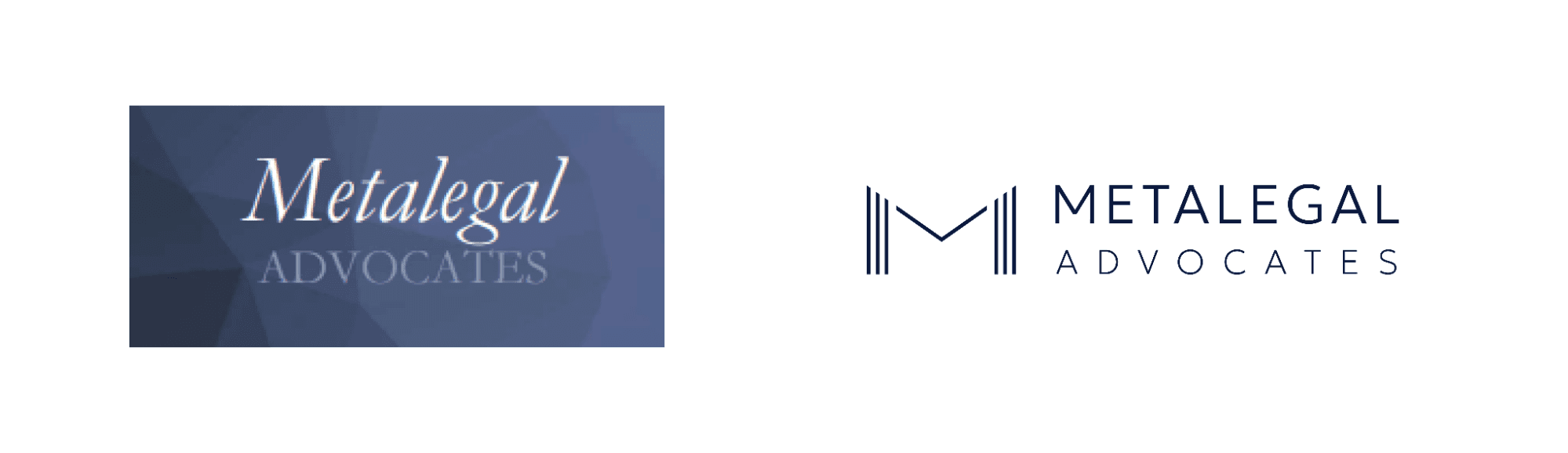
Problems that MetaLegal was facing: The current brand identity feels outdated and fails to connect with its target audience. It does not convey a premium or trustworthy image and struggles to differentiate itself from competitors.
Solutions we provide at Goldenflitch: Redesign and reposition the brand identity to establish a stronger emotional connection with the audience, communicate credibility and premium value, and create a distinctive presence in the competitive landscape.
FAQs
Q1. Is rebranding risky?
Yes, but so is standing still. The key to evolving without losing authenticity is to rebrand with the help of experienced design agencies.
Q2. How much does rebranding cost?
Costs vary depending on the scope. The investment should be proportional to the impact you expect. Working with a design agency ensures the budget is used strategically, focusing on the elements that deliver the most value.
Q3. How long does a rebrand take?
Timelines depend on complexity. A logo refresh may take weeks, while a full identity overhaul can take months. Agencies typically structure the process into research, design exploration, testing, and rollout.
Q4. How can I make sure my rebrand succeeds?
Measure engagement, recognition, and customer feedback. A successful rebrand should make your brand easier to identify, more relevant to your audience, and better positioned against competitors. Agencies often support this with before‑and‑after visuals, storytelling, and strategy to show measurable impact.
Q5. Can AI do branding or rebranding for my company?
AI can support branding by speeding up tasks. But surely it can’t replace human creativity, strategy, and emotional storytelling.

Let’s keep in touch.
Discover more about high-performance web design. Follow us on Twitter and Instagram.

